The Serious Power of Play!
I'll never forget that day. It was a Thursday. I had presented in the High Court, and I felt like a complete imposter. That morning, I had sobbed while pulling on my black-and-white attire. Puffy red eyes stared back at me in the mirror as I whispered, "You've got this."
[Insert Morgan Freeman’s voice]: “Bridget, in fact, did not have this…”
By the end of the day, I was a sweaty, anxious mess, convinced I wasn’t adding value—to the firm I worked at, the client I represented, or even myself. The thought of doing it all over again next week sent me spiraling. But I was so tired of feeling this way. I needed something—anything—to pull me out of it. So, I made a necklace.
A simple five-beaded, hand-painted necklace that would change my life.
As I painted, something shifted. My worries lifted, my mind expanded, and I started unlocking some wild ideas. I thought about how creativity puts us in a different headspace—how it strips hierarchy, connects us, and becomes a tool not just for self-expression but for problem-solving. And then, the most interesting thought of all hit me: We were encouraged to play, to get messy, to create as kids… but somewhere along the way, society told us to put the paintbrush down. That’s child’s play. Problems, real problems, are solved behind a desk.
But what if that’s completely wrong?
What if weaving play into the workplace is the key to unlocking performance? What if we need this conscious, creative fun as adults even more than we did as kids?
What if fun isn’t the distraction—but the strategy?
[Insert Morgan Freeman’s voice]: "Little did Bridget realize, she was indeed on to something..."
In this month's e-newsletter, I'll be unpacking the power of play and breaking down the myth that serious mahi requires a serious environment to work in and most interestingly, how our teams actually work better in a playful environment.
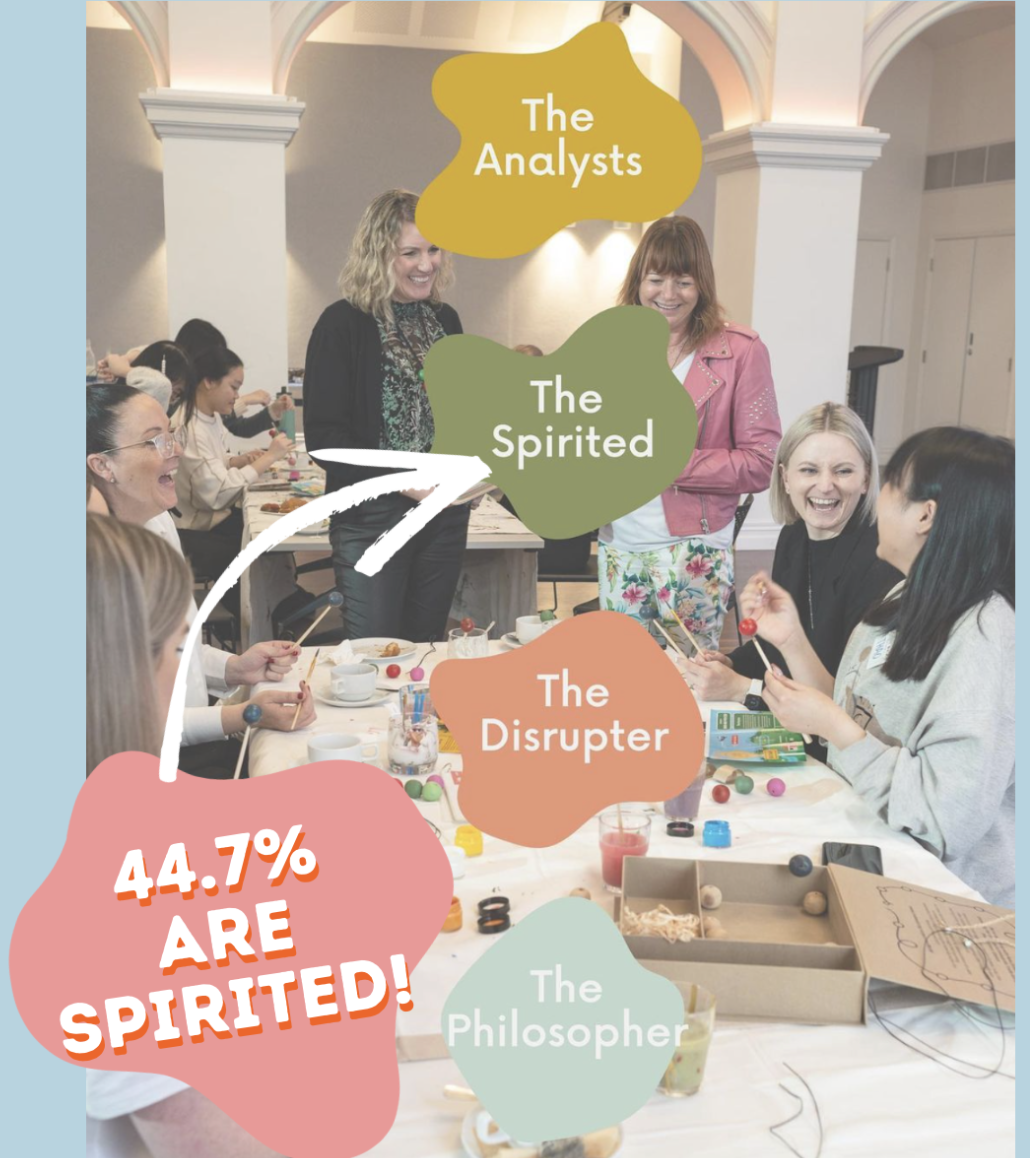
For nearly six years, I’ve been a full-time workshop facilitator with Bead and Proceed. After working with over 15,000 individuals and 100+ businesses and organisations, I’ve observed that people thrive in different environments when it comes to harnessing their creative potential. Through this experience, I’ve identified four key Creative Process Archetypes:
The Analyst – These individuals excel at deep investigation, data analysis, and pattern recognition. They thrive in a systematic and logical approach to learning and problem-solving, often preferring time to process independently before collaborating with others.
The Spirited – Embracing creativity through play, imagination, and curiosity, these people believe that problem-solving should be fun. Their unconventional approach may take others a while to catch up with, but the results—and the memories—always speak for themselves.
The Disrupter – Bold and unconventional, Disrupters challenge the status quo and love bouncing ideas off others. They thrive on embracing new, unconventional solutions to age-old problems.
The Philosopher – Philosophers seek deeper meaning, finding connections in symbols, themes, and ideas. They embrace intellectual, spiritual, and emotional challenges to fuel their creativity, often balancing collaborative teamwork with solitude to refine their insights.
In 2023, I developed a quiz to help people identify their archetype, and the data collected from hundreds of submissions has been fascinating!
An overwhelming 44.7% of respondents identified as Spirited, meaning their most effective environment for creativity, innovation, and focus is one that celebrates play and fun. However, most workplaces tend to foster an environment that suits The Analyst—quiet, independent, and focused on structure and systems. Interestingly, only 22.2% of respondents identified as Analysts, highlighting a clear mismatch between the environment most people work in and the type of environment they need to thrive creatively.
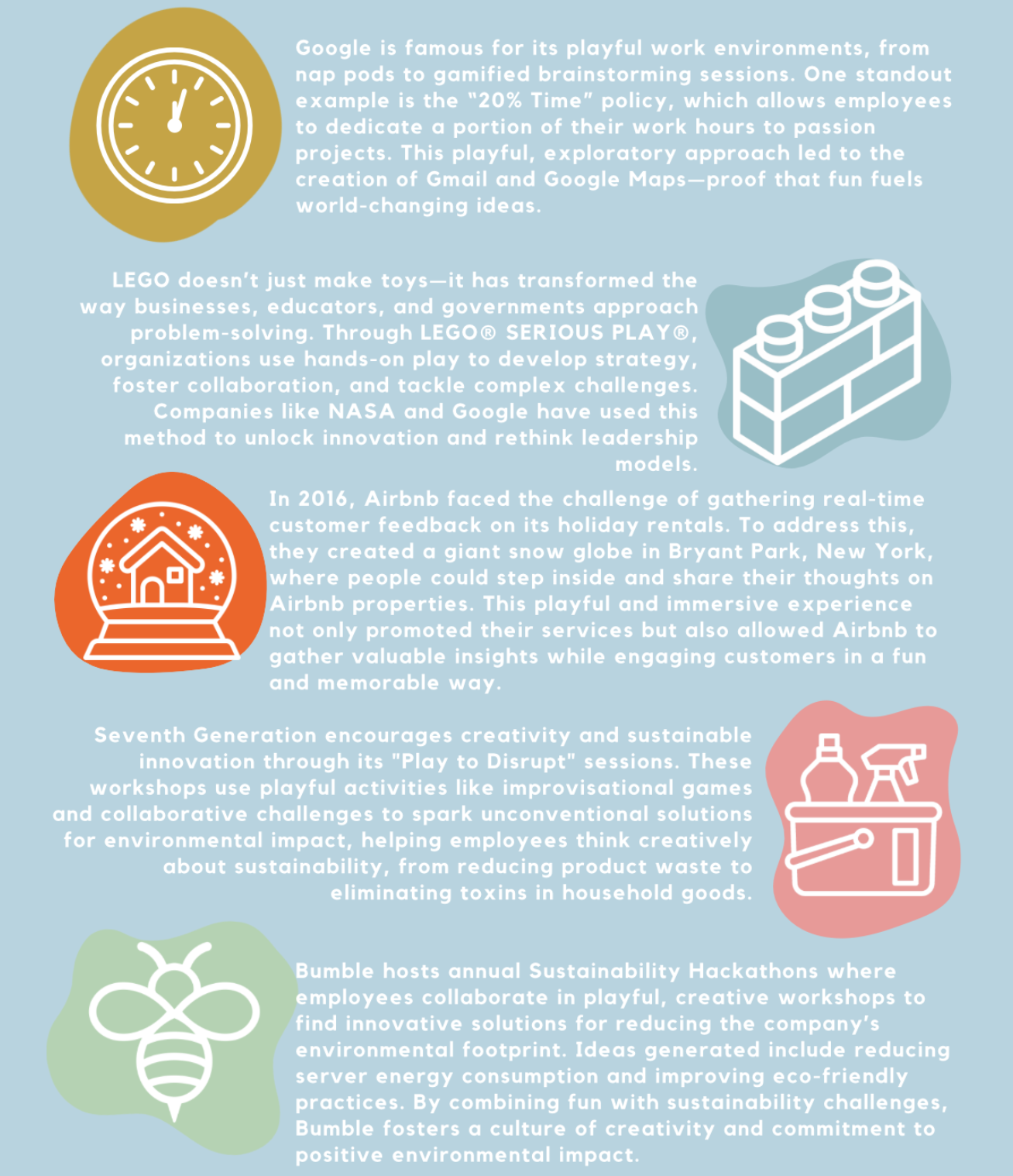
Real examples of weaving a creative approach for serious impact:
Flick us an email at bridget@beadandproceed.com and tell us how you're integrating a "spirited" working environment to unlock creative and innovated thinking - we'd LOVE to hear from you!
Some powerful stats:
Play boosts innovation – According to an IBM Global CEO Study 56% of CEOs say creativity is the most important leadership quality for business success.
Oxford University found that happy employees are 13% more productive than unhappy ones.
Gallup found that companies with engaged employees outperform competitors by 147%.
Workplace fun reduces absenteeism and turnover. Employees who enjoy their jobs take 66% fewer sick days, according to BrightHR.
The Harvard Business Review found companies that prioritise employee happiness outperform the stock market by 2-3% annually.
Organisations with high employee engagement see 21% higher profitability, according to Gallup.