

Stoicism and Sustainability: Ancient Wisdom for a Thriving Future
We're all familiar with the Greek myth of Pandora's Box: Zeus gave Pandora a box and warned her never to open it. But curiosity got the best of Pandora. The moment she lifted the lid, all the world's evils—sickness, death, and suffering—escaped. Panicked, she slammed it shut, trapping just one thing inside: Hope.
How often do we do the same? We read another bleak climate report, consider a new strategic direction, or open a new tab to read the news then let overwhelm, uncertainty, and skepticism shut us down—before hope even has a chance to take flight. We tell ourselves that skepticism is wisdom, that it’s protecting us from failure. But what if, instead, it’s preventing us from letting an idea flourish? From allowing hope to escape?
Because while my classics degree taught me that Pandora didn’t open a box, but a jar (pithos, to be exact), it’s my work in sustainability that has taught me that what we choose to release—or contain—matters just as much today.
In a world facing climate crisis, resource depletion, and international headlines that can scare the s*** out of us, we often focus on the damage already done, the "evils" that have escaped. But Stoicism teaches us that while we can't control the past, we can control our response—choosing action over despair, responsibility over inaction, and resilience over fear.
So, in this e-newsletter, I'll be linking some of the most powerful lessons of Stoicism back to Sustainability, illustrating how this ancient philosophy can be a guide for modern responsibility and sure... opening this email isn't the same as Pandora's jar but my wish is it gives you a bit of joy (and hope) for your Friday.
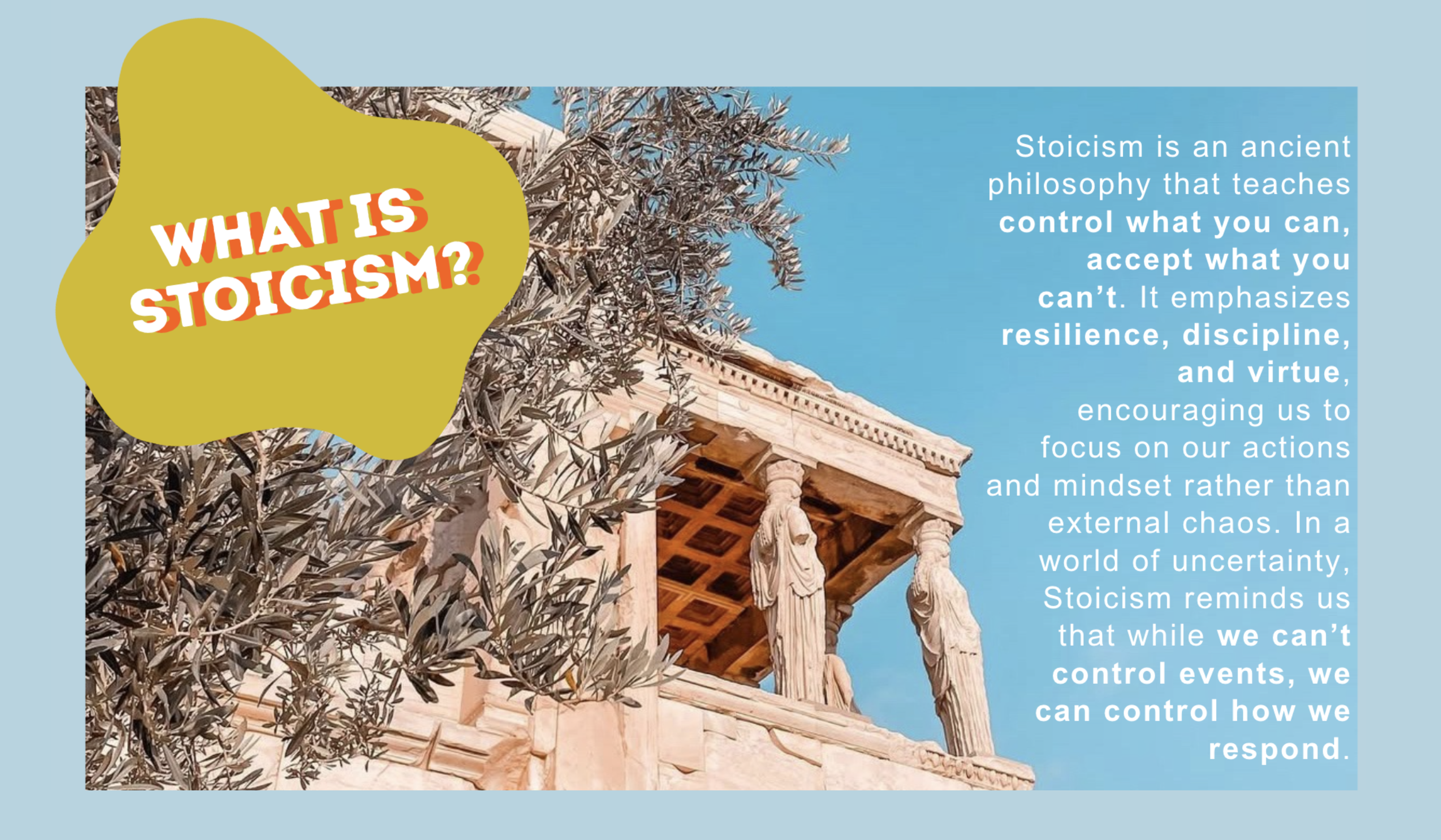
The Stoics were ancient philosophers who believed in mastering emotions, focusing on what we can control, and living with virtue. The movement began in Athens around 300 BCE with Zeno of Citium and later flourished in Rome, influencing leaders, writers, and thinkers.
Key Stoics included:
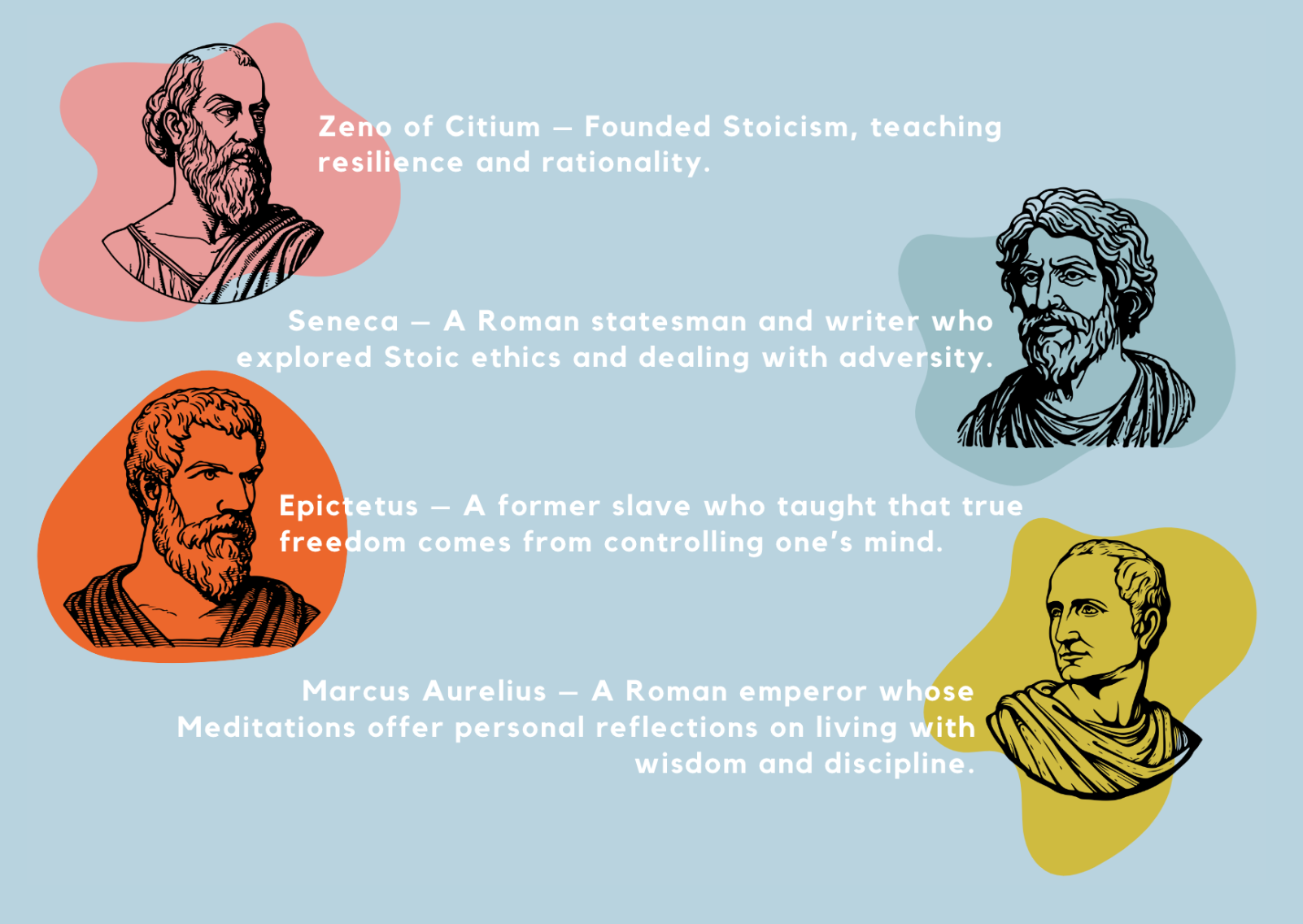
1. Control What You Can, Influence What You Can’t (Dichotomy of Control – Epictetus)
Sustainability can feel overwhelming, especially in the face of global crises. But Stoicism teaches us to direct energy toward what we can control—our business practices, supply chains, policies, and leadership decisions—rather than feeling paralysed by what we can’t. The greatest impact starts with small, strategic actions.
* Leadership Takeaway: Stop fixating on what’s broken in the world—start fixing what’s within your reach. Reduce waste, embed sustainable thinking in operations, and lead by example to create a ripple effect in your industry.
2. Act with Virtue, Not Just for Optics (Ethical Leadership – Seneca)
Stoicism emphasises virtue—doing the right thing, even when no one is watching. In business, sustainability shouldn’t just be about compliance or reputation management; it should be a core value embedded in decision-making.
* Leadership Takeaway: Build sustainability into your company’s DNA—not as a PR exercise, but as a moral and strategic commitment to future generations.
3. Discomfort is Necessary for Growth (Voluntary Discomfort – Seneca)
Stoics practiced hardship—fasting, sleeping on the floor—to prove to themselves that they could endure more than they thought. Sustainability demands the same mindset shift: moving away from convenience culture and embracing tough-but-necessary change.
* Leadership Takeaway: Build resilience into your business. Challenge teams to rethink waste, travel, and materials. Make experimentation normal. If sustainable alternatives seem “too hard,” ask: is that a real limitation, or just an excuse?
4. The Obstacle Is the Way (Marcus Aurelius' Problem-Solving Mindset)
Stoicism teaches that obstacles aren’t roadblocks—they’re signals for innovation. Climate change, shifting regulations, and consumer demand for sustainability aren’t barriers—they’re business opportunities in disguise.
* Leadership Takeaway: Regulations aren’t constraints—they’re market signals. Consumer shifts aren’t threats—they’re demand cues. The businesses that thrive won’t be the ones that resist change, but the ones that reinvent around it.
5. Nature is our biggest Teacher (Stoic Cosmopolitanism – Cleanthes)
Stoics saw themselves as part of a greater whole, living in harmony with nature and each other. Businesses that exploit nature without considering their place within it miss the bigger picture.
* Leadership Takeaway: Build your business as if it’s an ecosystem, not a machine—where every input and output connects responsibly to the whole. Adopt regenerative practices instead of extractive ones and keep your mind open to what nature can teach you.
6. Focus on Substance to Grow Impact (Fame and Fortune are Empty Pursuits – Epictetus)
Stoics dismissed status-seeking in favour of substance and it's recommended business and organisations do the same for their sustainable strategy. Rather than focusing on the end goal, think about the behavioural shifts and the team's personal connection behind the sustainable change to reach that goal.
* Leadership Takeaway: Stop asking, “How do we look?”—start asking, “What has actually changed?” Measure success by real-world transformation, not marketing-friendly KPIs. How is sustainability shifting behaviours across teams, stakeholders, and communities?
7. Sustainability Has a Deadline—And So Do You (Memento Mori – “Remember You Will Die”)
Stoics meditated on mortality—not to be grim, but to act with urgency. There are plenty of opportunities that need solving today and if you're unsure of where to start, the Sustainable Development Goals (SDGs) are an effective tool to help map your impact. And like any S.M.A.R.T. goal, there is a deadline: 2030. So, ask yourself how you can make meaningful change towards these challenges while the deadline approaches and if we zoom out further "what do you plan to do with your one wild and precious life?" - Mary Oliver.
* Leadership Takeaway: If sustainability feels like a “long-term” goal, you’re already late. Treat it like a financial crisis—act today, not tomorrow. Lead with urgency, not complacency—because business as usual is running out of time.